Gay During Ramadan المثلي المسلم ورمضان GaI Pendent Le Ramad
المثلي العربي المسلم وشهر رمضان
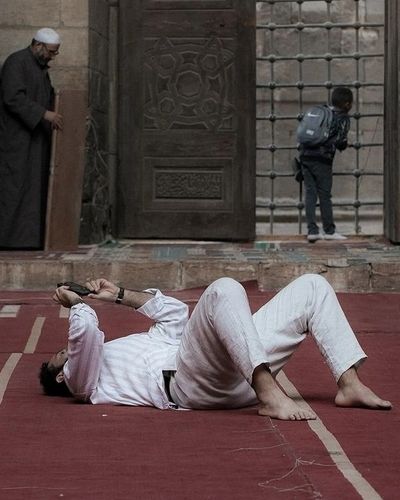
ها هو مرة أخرى، يصل إلى المسجد لصلاة الجمعة بعد دقائق قليلة من وصولي أنا ووالدي، كما يفعل غالبًا. شعره يلمع نظيفًا بعد الاستحمام، لحيته مُسرحة بالزيت، يرتدي قميصًا يلائم جسده الرياضي تمامًا؛ عضلات ذراعيه منفوخة، وصدره محدّد. مرّ من بجانبنا، مبتسمًا للحشود، وجلس على بعد بضعة صفوف أمامنا. في ذلك اليوم شممتُ عبير عطر العود الخاص به، ولحظةً، أظن أن أعيننا تلاقت أيضًا. ركع على ركبتيه، اسفل قدميه النظيفتين بارز من الخلف، ظهره يمتد واسعًا ليملأ رؤيتي أصبح كل ما أستطيع رؤيته في تلك اللحظة. سأظل أفكر به طوال الأسبوع، وأتمنى أن ربما في المرة القادمة، يمكننا الجلوس أقرب إلى بعضنا البعض. "حفظنا الله من الآثمين! من القتلة! من سفاحي الدماء! من الزناة! ...….. والمثليين!" صوت الإمام اخترق الخيال، معيدًا إياي في الثالثة عشرة من عمري إلى الواقع: هذا ليس مكانًا لأشخاص مثلي، قد فكرت.
كنت غالبًا ما أشعر بمشاعر الغضب في لحظات مثل هذه. أهتم بديني، حقًا، وفي كل مرة كنت أسمع جملًا تربط بين المثليين والمجرمين وأمثالهم، كنت أشعر وكأن جرحًا يفتح من جديد. كان الأمر مؤلمًا ومحيرًا، لأنني عرفت أنني لم أكن قادرًا على فعل أي شيء بشأن ميولي الجنسية.
هذه التجربة، كلما كبرتُ وجدت انها شائعة لدى الكثيرين منا نحن الرجال المثليين المسلمين. تبدأ القصة هكذا وتتمحور حولها معظم حياتك: صراع بين إدراك أنك، بالفعل، وبدون شك، منجذب إلى رجال آخرين، وحقيقة أنك تعيش في بيئة دينية تطلق الأحكام على نوع الشخص الذي أنت عليه.
الصراع الذي يتعامل معه الرجال المسلمون المثليون فيما يتعلق بدينهم وميولهم الجنسية يمكن أن يمتد طوال الحياة؛ فهو يشمل جزءًا كبيرًا من هويتنا. نحن عالقون بين ثقافتين: ثقافة غربية تخبرنا بالتخلي عن أي دين أو أيديولوجية لا تقبلنا، وثقافة شرقية تخبرنا بالتخلي عن أنفسنا أو نواجه عواقب وخيمة.
في منطقة ذات أغلبية مسلمة تحمل قدرًا ضئيلًا أو معدومًا من التسامح تجاه المثلية الجنسية، غالبًا على النقيض من أيديولوجية دينية ثقافية راسخة، فيصعب على الرجال المثليين إيجاد الانتماء، حتى عندما نجد أن هناك رجالًا مسلمين مثليين آخرين يشاركوننا هذه التجربة. عندما تكون معزولًا عن مجتمعك بسبب ميولك الجنسي، سواء كانت مكبوتة أو مُعبرًا عنها، تتحول التجربة الفردية للدين إلى حدث صادم من العزلة.
المناسبات الدينية، مثل رمضان، تأتي سنويًا لتضغط على جرح يحاول الرجل المسلم المثلي إما تجاهله أو على الأقل عدم معالجته بالكامل. من المفترض أن يكون رمضان وقتًا ينطلق فيه المرء إلى داخله لتعميق إيمانه؛ وهو أيضًا وقت تحتفل فيه العائلات معًا. العديد من الرجال المسلمين المثليين، مع ذلك، يُهملون خلال هذا الوقت، يُفصلون عن العائلة، والأكثر من ذلك عن حاجتهم الإنسانية للإيمان بقوة عليا.
استمرارية الصراع فيما يتعلق بدين الشخص وميوله الجنسية تجربة عالمية. في الواقع، يشعر بعض الرجال أنه من المهم التوفيق بين إيمانهم وميولهم الجنسية. ومع ذلك، فإن العديد من الرجال المثليين الذين نشأوا في بيئات مماثلة يبتعدون عن سردية الارتباك ولا يجدون السلام في المصالحة بين التجربتين. بدلاً من ذلك، يتجهون او يقررون، أن المعتقد الديني يعيق هويتهم كأشخاص. هؤلاء الرجال يجدون حريتهم في العيش متحررين من ضغوط المجتمع.
هذه التجارب،التي نعيشها كرجال عرب مثليين في مجموعتنا MCoalition، دفعتنا للتواصل مع بعض الرجال للحصول على رؤية أعمق حول ما يمر به الرجال المسلمون المثليون خلال الشهر الفضيل. ما نعرفه بالتأكيد، من خلال قراءة المداخلات التي تلقيناها، هو أنه تمامًا مثل التعبير الجنسي، فإن التعبير الديني فريد لكل شخص، والجميع لديه الحق في استكشاف تعبيرهم عن الذات كما يجدون ضروريًا.
عندما سألنا لؤي، صديقنا العربي المثلي البالغ من العمر 43 عامًا والمقيم في أوروبا، عن تجربته مع رمضان، أخبرنا قصة مألوفة جدًا: "أنا شخص رفض الدين وتفسيره لفترة طويلة، أو ربما الأشياء المتطرفة التي يفرضها الدين". شارك لواي، مع ذلك، أن علاقته بالدين تغيرت الآن. بالنسبة له، جاء هذا من خلال تصفية أصوات المجتمع التي كانت تقف في الطريق بينه وبين إيمانه. يقول: "نصل إلى نقطة نفهم فيها أنه لا ينبغي أن يكون هناك وسيط بيني وبين الله، لا رجل دين ولا أي شخص…… وجود الله في حياتي ساعدني، ومنحني السلام". اليوم، يصوم لؤي ويعلن أن لديه علاقة أقرب مع الايمان.
في الطرف الآخر من الطيف، يشارك علاء، طبيب مثلي يبلغ من العمر 23 عامًا، تجربة مختلفة. بالنسبة له، فرضت المؤسسات الدينية أغلالًا كان عليه كسرها ليعيش حياته ويكون سعيدًا. يشارك أنه على الرغم من قدرته على التحرر، فإن العديد من "المخاوف والصراعات التي لا يزال يواجهها هي بسبب مجتمعه وخلفيته الدينية والثقافية".
قصي، 34 عامًا، شارك تجربته مع الدين وهو ينمو في عائلة متدينة، حيث يقول إنه كان عليه ممارسة إيمانه بدافع الطاعة وليس الفهم. "كان الدين دائمًا شيئًا يُقال لي، يُشرح. النمو كرجل مثلي في الشرق الأوسط يعني التنقل في إيمان قائم على الطاعة، والذي لم يكن مقنعًا تمامًا". منذ ذلك الحين، تمكن من التنقل في هذه العلاقة مع الدين بشكل شخصي اوصله إلى قناعة خاصة "اختيار مبني على احب، خاص بي". يشارك أن هذا غيّر تجربته مع رمضان كتجربة جماعية. "ما أحبه أكثر في رمضان هو الشعور العميق بالسلام الذي يستقر داخلي… لطالما كنت عائليًا، ورؤية الجميع مجتمعين تذكرني أن الإيمان يمكن أن يكون حول التقرب وليس الاستبعاد".
جاك، مسلم اعتنق الإسلام بعمر ال 34 عامًا، شارك أنه في تجربته كرجل مسلم مثلي، تمكن من إيجاد العزاء مع كل من مجتمع الكوير والمجتمع المسلم. شارك تذكيرًا بأن عائلات الكوير "المختارة" يمكنها الاحتفال بالأعياد الدينية معًا أيضًا، تمامًا كما تفعل العائلات التقليدية. يشجعنا جميعًا على "التواصل مع إخواتنا الكويرين والمثليين المسلمين خلال هذا الشهر…. يمكننا إنشاء مجتمعنا والحصول على عائلة مختارة خلال هذا الشهر وتوفير وقت روحاني لنا جميعًا. يمكننا التعلم من بعضنا البعض ومنح أنفسنا تجربة عاطفية تصحيحية نستحقها جميعًا".
كل هؤلاء الرجال المثليين أظهرو لنا أن التجربة التي يمر بها المرء من حيث الدين والميول الجنسية هي شخصية جدًا. قد يكون للرجال المسلمين المثليين تجارب مماثلة في الطفولة، لكن كيف يختارون التطور من هذه التجارب يعود لهم تمامًا. هذا، في حد ذاته، تحرر.
في أوقات كرمضان يمكن أن تكون محيرة او تثير مشاعر متضاربة للعرب المثليين بشكل فردي، وقد تثير حتى حوارات بين أعضاء المجتمع. ما فهمناه من الرؤى التي تلقيناها من أعضاء المجتمع هو أن لكل شخص قصة فريدة، وكل شخص يستحق أن يكون في وضع يسمح له بأن يكون صادقًا مع نفسه وفي سلام. ما قد يكون صحيحًا لشخص واحد قد لا يكون صحيحًا لآخر. رمضان، والأعياد الدينية الأخرى، بقدر ما هي محيرة، يجب أن تكون تذكيرًا بأنك لست وحدك سواء كان ذلك في صراعك لموازنة تجربتك للدين والميول الجنسي، او رجل مثلي ممارس للدين، أو حتى ان كنت لا تهتم كثيرًا للدين.
جميع البشر لديهم الحق في استكشاف من هم، معتقداتهم، ميولهم الجنسي والرجال العرب المثليين ليسوا استثناءً من ذلك. لدينا جميعًا الحق في التنقل في هويتنا وتطويرها بطريقة تسمح لنا بأن نكون في سلام مع من نحن.
بالنسبة لي، شخصيًا أنا من أنا، وأنا أيضًا شخص يجد نفسه فضوليًا حول ما وراء الطبيعة والروحانيات. قد أزور المسجد الآن، من وقت لآخر، وقد أشارك في الصيام أيضًا. خلال هذه اللحظات في المسجد، أنتهي بالتفكير في أن الجار الذي لم أره منذ وقت طويل قد كبر حقًا وأصبح اليوم اكثر من قبل نوعي المفضل لدي من الرجال. قد أرغب في الدردشة معه، وقد أخبر أصدقائي المثليين عن ذلك لاحقًا في تلك الليلة.
The Arab Gay Man and Ramadan
There he was again, arriving at the Masjid for the Friday prayer a few minutes later than my dad and I had, as he often would. His hair glistening fresh post-shower, beard smoothed out from the oils, a well-fitted shirt that complemented his body-builder physique just right; biceps curved, chest defined. He walked past us, smiling at the crowd, and sat a few rows ahead. I was lucky enough that day to catch a whiff of his Oud parfum, and for a second, I think our eyes met, too. He knelt to his knees, the clean soles of his feet protruding from behind, his back spreading wide to engulf my vision — he would become all that I could see in that moment. I would wonder about him all week, and hoped that maybe next time, we could sit even closer to each other. "May Allah guard us from the sinners! The murderers! The bloodshedders! The adulterers! …….. The HOMOSEXUALS!" the voice of the Imam broke through the fantasy, bringing thirteen-year-old me back to reality: this is not the place for people like me, I would think.
I would often experience feelings of anger in moments such as these. I cared about my faith, truly, and every time I would hear sentences pairing gay people with criminals and their likes, I would feel a wound reopen. It was hurtful and confusing, because I knew that I was not able to do anything about my sexuality.
This experience, as I grew up to understand, is common for many of us gay men of Muslim descent. The story starts this way and centers around it for most of your life: a struggle between the realization that you are, indeed, and without a doubt, attracted to other men, and the fact that you exist in a religious environment that casts judgment over the type of person you are.
The grapple that gay Muslim men deal with in regard to their faith and sexuality can span across a lifetime; it encompasses a large part of who we are. We are caught between two cultures: a western culture that tells us to abandon any faith or ideology that does not accept us, and an eastern one that tells us to abandon ourselves or otherwise face harsh consequences.
In a Muslim-majority region that carries little to no tolerance towards homosexuality, often in contrast to strongly held religious cultural ideology, it is difficult for gay men to find belonging, even when we find that there are other gay Muslim men who share this experience. When you are isolated from your community due to your sexuality, regardless of whether it is suppressed or expressed, the solitary experience of religion turns into a traumatic event of isolation.
Religious events, such as Ramadan, come around annually to press on a wound that the gay Muslim man tries to either ignore or at least not tend to fully. Ramadan is supposed to be a time during which one turns inwards to deepen his faith; it is also a time during which families are celebrating together. Many gay Muslim men, however, are abandoned during this time, separated from family, and more so from their human need to believe in a higher power.
The consistency of the struggle in regard to one's religion and sexuality is a universal experience, though. Indeed, some men feel that it is important to reconcile their faith with their sexuality. However, many gay men with similar upbringings diverge from the narrative of confusion and do not find peace in the reconciliation of the two experiences. Instead, they come to an understanding, and sometimes a decision, that religious belief hinders who they are as a person. These men find freedom in living liberated from the forces of society.
It is these experiences — ones we know intimately as gay Arab men at M-Coalition — that led us to reach out to our community to gain deeper insight into what Muslim gay men go through during the holy month. What we know for sure, in reading the input we received, is that just like sexual expression, religious expression is unique to each person, and everyone has the right to explore their self-expression as they find necessary.
When we asked Louay, a 43-year-old gay Arab friend residing in Europe, about his experience with Ramadan, he told us a story much too familiar: "I am someone who refused religion and their interpretation for a long time, or maybe the extreme things forced by religion." Louay shared, however, that his relationship with religion has changed now. To him, this has come through filtering out the voices of society that were standing in the way between him and his faith. He says: "we get to a point that we understand that there shouldn't be a middle person between me and God, no cleric or any person……Having God in my life has helped me, and given me peace." Today, Louay fasts and declares that he has a closer relationship with spirituality.
At the other end of the spectrum, Alaa, a 23-year-old gay doctor, shares a different experience. To him, religious institutions enforced shackles that he had to break away from in order to live his life and be happy. He shares that despite his ability to break free, many of the "insecurities and struggles that he still faces are due to his religious and cultural society and background."
Qusai, a 34-year-old, shared his experience with religion growing up in a religious family, where he says he had to practice his faith out of obedience rather than understanding. "Religion was always something told to me, never explained. Growing up gay in the Middle East meant navigating a faith based on obedience, which never quite clicked," he says. Since then, he has been able to navigate this relationship with religion privately and has reached a place where he is able to practice out of his own will — "a loving choice made on his own terms." He shares that this has shifted his experience with Ramadan as a communal experience. "What I love most about Ramadan is the profound sense of peace it settles within me… I have always been family oriented, and seeing everyone gathered together reminds me that faith can be about connection rather than exclusion."
Jack, a 34-year-old Muslim convert, shared that in his experience of being a gay Muslim, he has been able to find solace with both the queer and Muslim communities. He shared a reminder that queer chosen families can celebrate religious holidays together as well, just as nuclear families do. He encourages all of us to "reach out to our queer brothers and sisters during this month…. we can create community and have chosen family during this month and provide us all with a spiritually uplifting time. We can learn from one another and give ourselves a corrective emotional experience that we all deserve."
Each of these gay men has shown us that the experience that one has in terms of religion and sexuality is quite personal. Gay Muslim men may have similar experiences in childhood, but how they choose to evolve from these experiences is completely up to them. That, in its own right, is liberation.
Times like Ramadan can be confusing. They also bring up a lot of mixed emotions for gay Arabs individually, and they may even spark conversation amongst community members. What we understood from the insight we received from community members is that each person has a unique story, and each person deserves to be in a position that allows them to be true to themselves and at peace. What might be true for one person may not be true for another. Ramadan, and other religious holidays, as confusing as they are, should be a reminder that you are not alone — whether that is in your struggle with balancing your experience of religion and sexuality, whether you are a faith-practicing queer man, or whether you do not care too much for religion.
All human beings have the right to explore who they are, their beliefs, their sexuality — and gay Arab men are not exempt from that. We all have the right to navigate our identity and develop it in a way that allows us to be at peace with who we are.
For me, personally — I am who I am, and I am also someone who finds myself curious about the metaphysical and the spiritual. I might visit the Masjid now, from time to time, and I might partake in fasting too. I might, during these moments at the mosque, end up thinking that the neighbor who I have not seen in a long time has really grown into my type of guy. I might want to have a chat with him, and I might tell my gay friends about it later that night.
Les gais musulmans arabes et le mois du Ramadan
Il était là, encore une fois. Il est arrivé à la mosquée pour la prière du vendredi quelques minutes après mon père et moi, comme il le faisait souvent. Ses cheveux brillaient, tout propres après sa douche, sa barbe était lissée avec de l'huile, et il portait une chemise bien ajustée qui mettait en valeur son corps musclé : ses biceps dessinés, son torse défini. Il est passé devant nous, a souri à la foule, et s'est assis quelques rangs plus loin. Ce jour-là, j'ai eu la chance de sentir son parfum d'oud, et pendant une seconde, je crois que nos regards se sont croisés aussi. Il s'est mis à genoux, la plante propre de ses pieds dépassant derrière, son dos large qui remplissait tout mon champ de vision — il est devenu tout ce que je pouvais voir à ce moment-là. J'ai pensé à lui toute la semaine, en espérant que peut-être, la prochaine fois, on pourrait s'asseoir un peu plus près l'un de l'autre.
« Qu'Allah nous protège des pécheurs ! Des meurtriers ! De ceux qui font couler le sang ! Des adultères ! …….. Des HOMOSEXUELS ! »
La voix de l'imam a brisé ma rêverie, ramenant le moi de treize ans à la réalité : Ce n'est pas un endroit pour des gens comme moi, ai-je pensé.
Je ressentais souvent de la colère dans des moments comme celui-ci. Je tenais à ma foi, vraiment, et chaque fois que j'entendais des phrases qui associaient les gays aux criminels et autres, j'avais l'impression qu'une blessure se rouvrait. C'était douloureux et déroutant, parce que je savais que je ne pouvais rien changer à mon orientation sexuelle.
Cette expérience, en grandissant, j'ai compris qu'elle est commune à beaucoup d'entre nous, hommes gays d'origine musulmane. L'histoire commence comme ça et tourne autour de ça pendant la majeure partie de ta vie : un combat entre le fait de réaliser que tu es, sans aucun doute, attiré par d'autres hommes, et le fait de vivre dans un environnement religieux qui juge le type de personne que tu es.
Ce tiraillement entre foi et sexualité que vivent les hommes musulmans gays peut durer toute une vie ; il touche une grande partie de qui nous sommes. Nous sommes coincés entre deux cultures : une culture occidentale qui nous dit d'abandonner toute foi ou idéologie qui ne nous accepte pas, et une culture orientale qui nous dit de nous renier, sinon nous faisons face à de lourdes conséquences.
Dans une région à majorité musulmane où il y a peu ou pas de tolérance envers l'homosexualité, souvent à l'opposé d'une idéologie religieuse et culturelle bien ancrée, il est difficile pour les hommes gays de trouver leur place, même quand on sait qu'il y a d'autres hommes musulmans gays qui vivent la même chose. Quand tu es isolé de ta communauté à cause de ta sexualité, qu'elle soit cachée ou assumée, l'expérience personnelle de la religion devient un moment traumatisant de solitude.
Les moments religieux, comme le Ramadan, reviennent chaque année pour appuyer sur une blessure que l'homme musulman gay essaie soit d'ignorer, soit de ne pas soigner complètement. Le Ramadan est censé être un moment où l'on se tourne vers l'intérieur pour approfondir sa foi ; c'est aussi un moment où les familles se retrouvent et célèbrent ensemble. Pourtant, beaucoup d'hommes musulmans gays sont laissés de côté pendant cette période, séparés de leur famille, et encore plus de leur besoin humain de croire en une puissance supérieure.
La persistance de ce combat entre religion et sexualité n'est pas la même pour tout le monde, bien sûr. En réalité, certains hommes trouvent important de réconcilier leur foi avec leur sexualité. Mais beaucoup d'hommes gays ayant grandi dans des contextes similaires s'éloignent de cette idée de confusion et ne trouvent pas la paix dans cette réconciliation. À la place, ils arrivent à comprendre, et parfois à décider, que la croyance religieuse freine qui ils sont vraiment. Ces hommes trouvent de la joie à vivre libérés des pressions de la société.
Ce sont ces expériences — que nous connaissons bien en tant qu'hommes arabes gays chez M-Coalition — qui nous ont poussés à aller vers notre communauté pour mieux comprendre ce que vivent les hommes musulmans gays pendant le mois sacré. Ce que nous savons avec certitude, en lisant les témoignages reçus, c'est que tout comme l'expression sexuelle, l'expression religieuse est unique à chacun, et que chacun a le droit d'explorer sa propre façon d'être, comme il le juge nécessaire.
Quand nous avons demandé à Louay, un ami arabe gay de 43 ans vivant en Europe, de nous parler de son expérience du Ramadan, il nous a raconté une histoire trop familière : « J'ai longtemps rejeté la religion et son interprétation, ou peut-être les choses extrêmes qu'elle impose. » Louay a partagé, cependant, que sa relation avec la religion a changé aujourd'hui. Pour lui, cela est venu en filtrant les voix de la société qui se mettaient entre lui et sa foi. Il dit : « On arrive à un moment où l'on comprend qu'il ne devrait pas y avoir d'intermédiaire entre moi et Dieu, ni clerc ni personne d'autre… Avoir Dieu dans ma vie m'a aidé, et m'a apporté la paix. » Aujourd'hui, Louay jeûne et dit avoir une relation plus proche avec la spiritualité.
À l'autre bout du spectre, Alaa, un médecin gay de 23 ans, partage une expérience différente. Pour lui, les institutions religieuses ont imposé des chaînes dont il a dû se libérer pour vivre sa vie et être heureux. Il partage que malgré sa capacité à se libérer, beaucoup de « ses insécurités et luttes actuelles viennent de sa société et de son héritage religieux et culturel. »
Qusai, 34 ans, citoyen jordanien, a partagé son expérience avec la religion en grandissant dans une famille croyante, où il dit qu'il pratiquait par obéissance plutôt que par compréhension. « La religion, c'était toujours quelque chose qu'on me disait, jamais qu'on m'expliquait. Grandir gay au Moyen-Orient signifiait naviguer dans une foi basée sur l'obéissance, qui n'a jamais vraiment fait sens pour moi », dit-il. Depuis, il a pu gérer cette relation avec la religion de façon privée et est arrivé à un endroit où il pratique par choix personnel — « un choix fait avec amour, selon mes propres termes. » Il partage que cela a transformé son vécu du Ramadan comme moment communautaire. « Ce que j'aime le plus dans le Ramadan, c'est le sentiment profond de paix qui s'installe en moi… J'ai toujours été très famille, et voir tout le monde réuni me rappelle que la foi peut être une question de lien, pas d'exclusion. »
Jack, un converti à l'islam de 34 ans, a partagé que dans son expérience d'homme gay musulman, il a pu trouver du réconfort à la fois dans la communauté queer et dans la communauté musulmane. Il nous rappelle que les familles queer « choisies » peuvent aussi célébrer les fêtes religieuses ensemble, tout comme les familles traditionnelles. Il nous encourage tous à « tendre la main à nos frères et sœurs queer pendant ce mois… Nous pouvons créer une communauté, avoir une famille choisie pendant ce mois, et nous offrir à tous un moment spirituellement enrichissant. Nous pouvons apprendre les uns des autres et nous offrir une expérience émotionnelle réparatrice que nous méritons tous. »
Chacun de ces hommes gays nous a montré que l'expérience personnelle entre religion et sexualité est profondément intime. Les hommes musulmans gays peuvent avoir des expériences similaires dans l'enfance, mais la façon dont ils choisissent d'évoluer à partir de ces expériences leur appartient entièrement. Cela, en soi, c'est déjà une forme de liberté.
Des moments comme le Ramadan peuvent prêter à confusion. Ils font aussi remonter beaucoup d'émotions contradictoires pour les Arabes gays, individuellement, et peuvent même ouvrir des conversations au sein de la communauté. Ce que nous avons compris des témoignages reçus, c'est que chaque personne a une histoire unique, et que chacun mérite d'être dans une situation qui lui permet d'être vrai avec lui-même et en paix. Ce qui est vrai pour l'un ne l'est pas forcément pour l'autre. Le Ramadan, et les autres fêtes religieuses, aussi déroutants soient-ils, devraient nous rappeler que nous ne sommes pas seuls — que ce soit dans notre combat pour équilibrer notre vécu de la religion et de la sexualité, que l'on soit un homme queer pratiquant, ou que l'on ne soit pas très attaché à la religion.
Tous les êtres humains ont le droit d'explorer qui ils sont, leurs croyances, leur sexualité — et les hommes arabes gays n'y font pas exception. Nous avons tous le droit de naviguer dans notre identité et de la développer d'une façon qui nous permet d'être en paix avec qui nous sommes.
Pour moi, personnellement — je suis qui je suis, et je suis aussi quelqu'un qui se sent curieux du métaphysique et du spirituel. Je peux visiter la mosquée maintenant, de temps en temps, et je peux aussi jeûner. Pendant ces moments à la mosquée, il m'arrive de penser que le voisin que je n'ai pas vu depuis longtemps a vraiment grandi et correspond aujourd'hui encore plus à mon type d'homme. J'aurais peut-être envie de discuter avec lui, et j'en parlerais peut-être à mes amis gays plus tard dans la soirée.